

On Surviving
And empathy spread

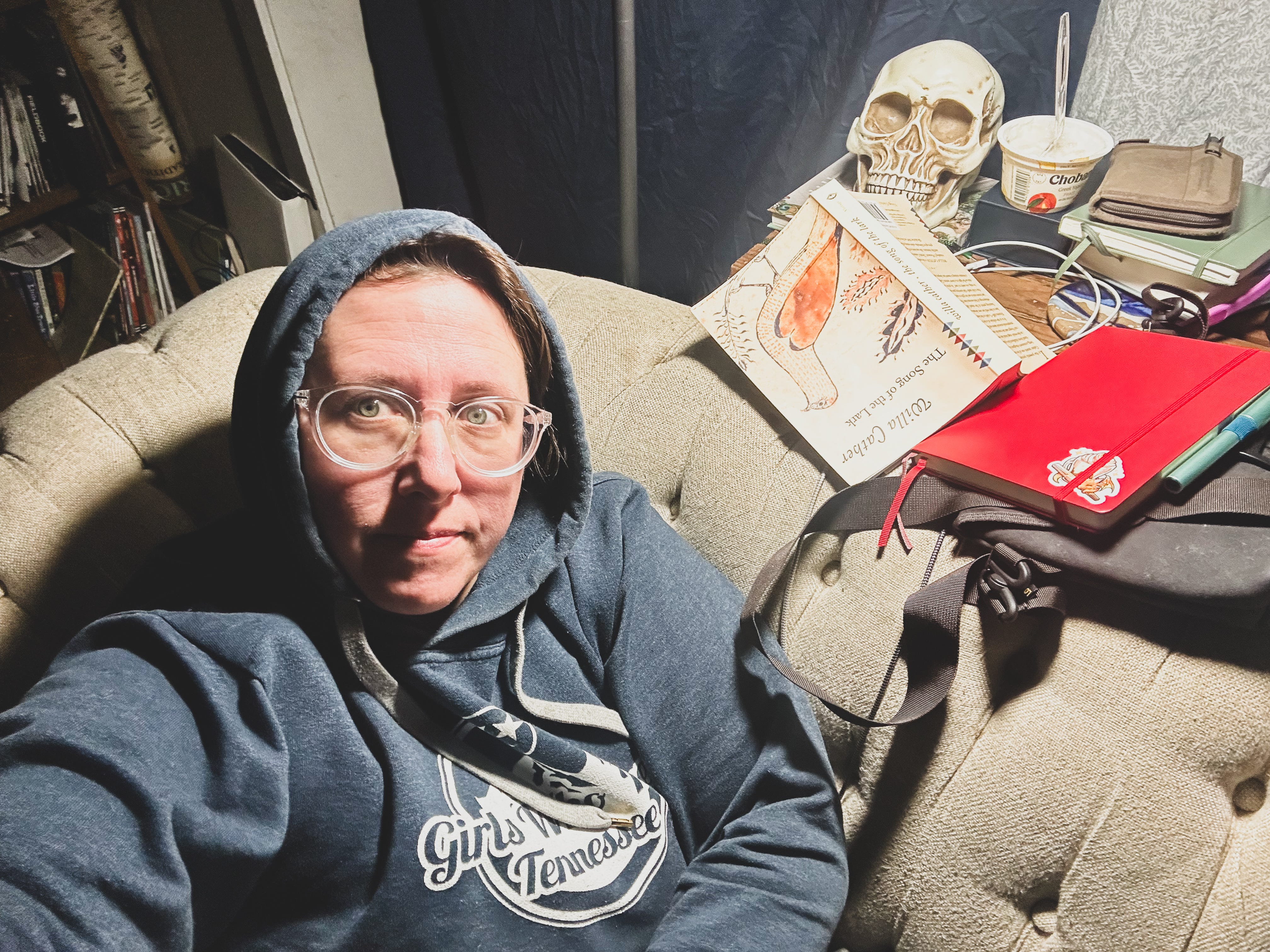
It’s 5:45 am. I slip from my warm cocoon on the couch and lace up my boots. I slip past the bedsheets hanging between the living room and the kitchen forming a barrier that allows us to get the no living room to a pretty normal room temperature. It’s chilly on the other side. I slip into my coat, hat, and gloves and face the thirteen degree dark to check the gas gauge on the generator. It’s at a quarter. I check the sunrise time and decide I’ve got an hour and I’d rather brave the refilling process when the sun is at least making an effort than in this coldest hour of the day.
Before I go back out I hear my husband putting boots on and coming downstairs. He’s been bravely sleeping upstairs in the low 40s under his 20-degree camping quilt because the living room is so full with me on the couch, the kids and dogs on the floor. He comes through wearing his coat and does the generator refill. He’s done almost all the generator refills and, honestly, I’ve never been more attracted to him. Not that I wasn’t before, but he’s just selflessly taken on the lion’s share of collecting supplies, getting gas, refilling the generator every six-ish hours round the clock. And that’s hot if I do say so myself.
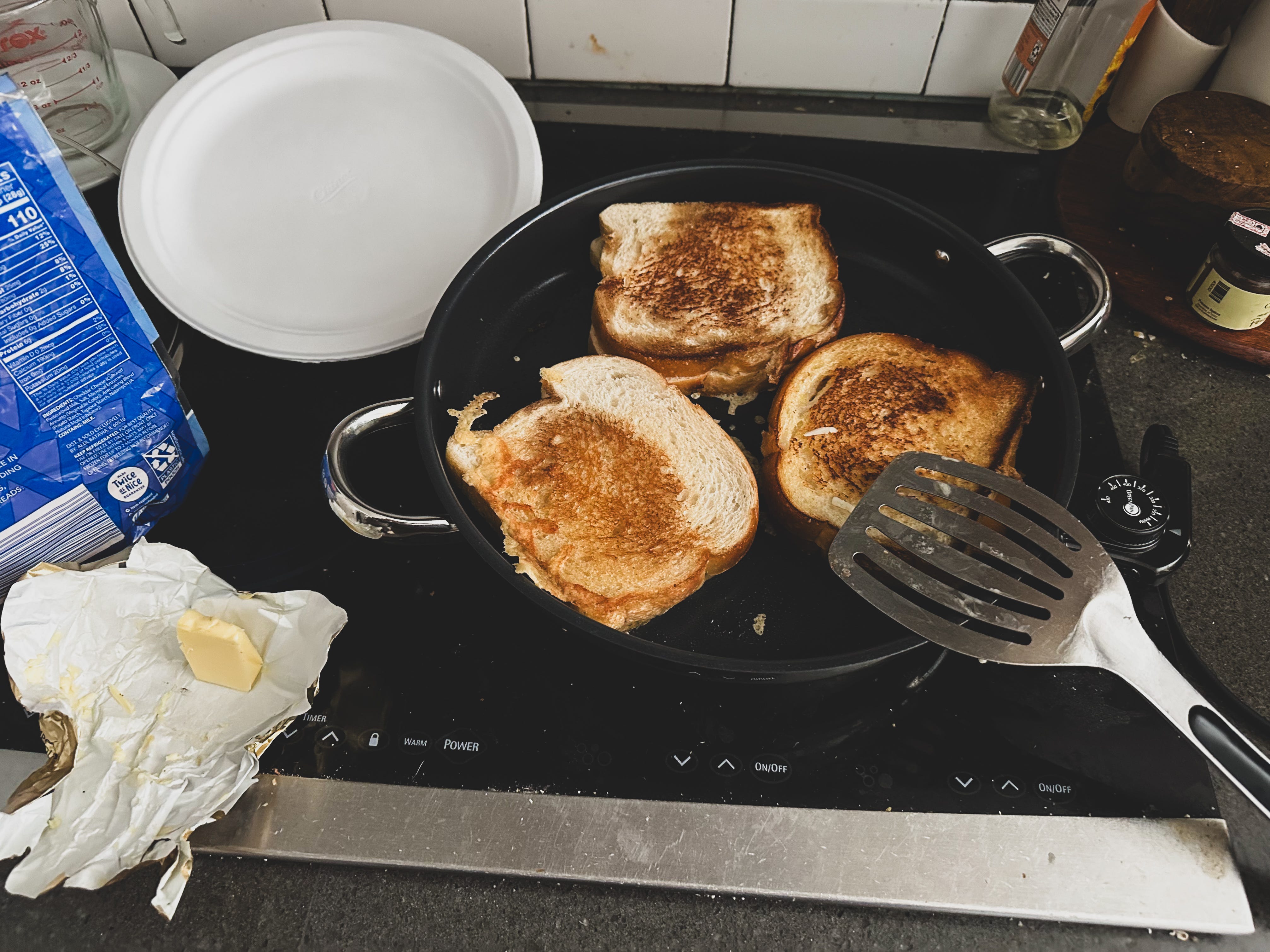
I’ve been feeding kids, chasing drafts, saving animals. I tented the living room in sheets across the wide openings to the other rooms. Normally, I love our open floor plan, but we were never going to get warm enough trying to heat the whole first floor especially with it open to the front hall and stairway which is always colder than the rest of the house. I took the kids to a friends house for showers and did a load of laundry although I can’t pretend that was much work as my friend fed us and helped with the laundry and basically ordered me to relax and stop feeling bad about it.
It turns out surviving in the cold is a lot of work both mental and physical.
And then I think of the people ICE has pulled from their houses, at least once in their underwear. I see pictures of overcrowded detention centers with men women and children, but separated, huddling under emergency blankets. Kids without their parents, spouses separated.
I think of the uncertainty of waiting for my power to come back on and how stressful and mentally taxing it is: and I know where all my family members are.
No one has been executed on the streets of my city for protesting.
I think of how badly I want to get back to normal and then can only imagine how that is when you don’t know where one of your family members is. Or how long your city will be occupied. Or or or.
I’m in the midst of a natural disaster and realizing my stress is still so much less than others dealing with the direct impact of a fascist regime bent on subduing all of us with its violence and hatred.
I write this not to diminish the very real struggle that I and so many in the Nashville area are currently experiencing—and I didn’t even touch on the fact that I have a house that’s well-insulated and I’ve been able to get at least part of it warm again when so many don’t—but to remind us all to keep fighting each in our own way for the mutual thriving of everyone.
Did you appreciate this post? Please go to the top or bottom of the post in your browser and click the little heart! It helps other people find my Substack. Thank you!


“I wish I could still believe in God, but I can’t be a Christian anymore because of ______” Fill-in-the-blank with racism, misogyny, homophobia, toxic capitalism, and so on. I’ve had this conversation with different people almost word-for-word over and over. White American Christianity has so defined God that many people cannot separate God from the toxic theology they were taught.
But this isn’t the God I see in the Bible. The Bible shows us a God meeting people where they are and nudging them towards justice and total thriving for all: shalom. The Bible details arcs of justice and societal reform. If we understand how radical those arcs were in the context of the day, we can extend them forward into the future and figure out how to work for justice, total thriving, and societal reformation in our day.
I grew up in that first world view. Come along, and I’ll tell you the story of how I escaped, and I’ll show you a theology that I believe paints a more accurate picture: a faith for the common good where everyone thrives and no one is left out.
Purchase
Wipf and Stock | Order through your favorite Indie bookstore | Amazon
Connect

Anna Elisabeth Howard writes highly caffeinated takes on shalom as a lens for everything from her front porch in Hendersonville, TN where she lives with her husband and two sons. She is a community organizer and movement chaplain with a background in youth and family ministry and is a graduate of Fuller Theological Seminary. An avid hiker and backpacker, many thoughts start somewhere in the middle of the woods, or under a waterfall. She is a regular contributor to Earth & Altar and her latest book is Inward Apocalypse: Uncovering a Faith for the Common Good.
Buy Inward Apocalypse: Amazon | Independent Booksellers
Social media: Facebook | Instagram
Join the subscriber chat! If you already have the app, just go to the new chat section, if not, download the app here.
I’m one of the facilitators of Freedom Road’s Global Writers’ Group. If you’ve been looking for a community of writers to boost you to the next step of your writing goals—wherever you are in that process—join us!
Yeah, the guilt of having even minimal things through this gap is real. I hate that there are so many battles happening right now for everyone.